Costa Rica Finca Casa de Piedra
Costa Rica Finca Casa de Piedra
Couldn't load pickup availability
TASTING NOTES:
Cherry brandy, dark chocolate, raisin
ROAST:
Medium Light
COFFEE PROFILE:
| Origin | Costa Rica |
| Subregion | Tarrazú |
| Processing | Natural/Dry Processed |
| Growing Altitude | 1600m |
| Variety | Red Catuai |
The History of Costa Rican Coffee
Coffee was introduced to Costa Rica as early as 1779, and within just 50 years it had become the country’s most profitable crop. By the 1830s, production had grown so rapidly that there was more coffee than ships traveling south could transport. At the same time, there was almost no infrastructure to move even small quantities of unroasted coffee to the country’s east coast—despite London being only about 5,000 miles away.
In 1841, the challenges faced by Costa Rican coffee producers caught the attention of a rising shipping entrepreneur named William Le Lacheur. On Christmas Day that year, he sailed his ship, The Monarch, into the port of Puntarenas, marking the start of a long and mutually beneficial partnership. During one journey to London in late 1843, The Monarch transported over half a million pounds of Costa Rican coffee.
The Process
The exact details behind the anaerobic process used at Finca Casa de Piedra remain a closely protected family secret. However, some key steps are known:
Careful cherry selection is essential. Brix measurements are taken to ensure the fruit is picked at peak ripeness.
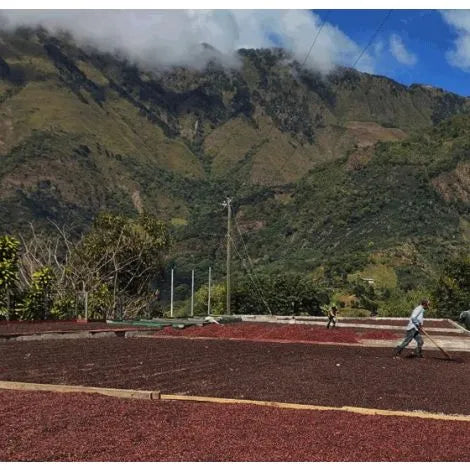
The cherries are then pre-dried on concrete patios for around 48 hours before fermentation begins.
An extended fermentation takes place with the whole cherries in sealed plastic tanks without valves. Throughout this stage, temperature is carefully controlled, while Brix levels, along with the aroma and visual condition of the pulp, are closely monitored.
Once fermentation is complete, the cherries are transferred to raised drying beds, where they are left to dry for approximately 30 days.
Share
High quality, freshly roasted beans arrived quicker than expected. Flavours just as described by the tasting notes. I will definitely order again.